Showing posts with label cycling instructor training. Show all posts

Monday, September 5

Into the Breach AGAIN With Bike School

My First Bike Ed Course That Actually Happened. Richard and Dorothy, In Front of the Ginger House
My loyal reader may have noticed that I advocate that a cyclist wishing to ride from "Point to Point" should educate him or herself about the safest way to do so. Regardless of whether one is a fan of particular cycling facilities,or an opponent of same, it only makes sense to know how best to traverse the territory you have to cross. Or so I would suggest. My loyal reader may also have observed that I slip handy little snippets about how to ride safely in various situations and how to deal with the problems that cyclists face. Finally, I DO believe that bike school has things to offer pretty much any cyclist, regardless of age or experience, in the search for being able to confidently ride just a smidge safer than before, watching what other experienced cyclists suggest, I've made posts about bike school I've attended in the past, specifically here, here, here, here, here, here, here, here, here, here, here, here, and here. I probably missed a few links, but you also probably get the general trend: it's about 5% of my posts. As I stated, a significant part of the reason was outlined here. Quite simply, the Bike League was, and remains, the only national organization that takes bike education seriously. THAT should not be lightly discarded.

Even Before My First Bike Ed Link, I Tried to Take a Course. The Instructor Didn't Show.
Thank GOD for Forester's Book. It Saved Me.
Changing of the Wind
However, just as our near-record breaking Texas summer has yielded, at least for the moment, to a wind shift, bike education in the US is undergoing change. The long-time Bike League education director, Preston Tyree, has elected to take advantage of a well-deserved retirement while he's still fit enough to enjoy it. The new director, Alissa Simcox, has good education credentials, but we have yet to see how she will perform as the new Education Director. Gail Spann, the League Director with Education as part and parcel of her charter,  remains a constant throughout this. Personally, I think Gail's got good mojo, but there's a lot in front of us. What's more, Gail is a Texan and that counts for something.. But there may be another choice arising, and quite simply, I want to see what it really offers beyond "another choice." You see, next weekend, there will be a Cycling Savvy course offered in the DFW Metroplex, and I will be there. I think Chandra will be there as well. At least one of the teachers, called "CSIs," is Waco Moore. Waco took his Bike League LCI Seminar with Chandra and myself, so at one level this will be a reunion of sorts. What's more, Waco is only one of two in my LCI Seminar to become a "CSI." I've seen Waco ride and he's solid. He also sat beside PM Summer and myself at the Reckless Driving trial of Chipseal just about a year ago. On the other hand, this is a course offered under the umbrella of the Florida Bicycle Association. In Texas? In the words of Keri Caffrey; "WTF?"

Which Witch?
If There is to be a War, Let it Begin Here
So, why am I taking YET ANOTHER Bike Ed course? It costs $75 and the links above suggest this might simply be more "good money after bad." Assuming I like things, I'll have to dump even more money to become a "CSI." This is entirely on top of what it cost to become a League Cycling Instructor. Well, put simply, I'm curious, and I'm fortunate enough that the bucks are not an overwhelming consideration. The Cycling Savvy course pitches itself as an "all new" approach to cycling education. It uses the same riding principles I follow on a daily basis and, admittedly, uses the same operation principles as in Traffic 101 of the Bike League, but it strips away the "fluff" and the "hot button terms" in favor of focusing on behavior-changing instruction. For example, it eliminates the mechanical repair aspects of Traffic 101, noting that these can be easily obtained from LBS courses. It also eliminates the "test" that is part of Traffic 101, noting this offers no value to the student (duh!). As a result, there is more time to focus on "how to ride confidently and safely." Quite frankly, I can't argue with the premise of focusing on what the students really NEED and can't get elsewhere.. A course, modified and reduced from what John Forester originally came up with, might well be an improvement. After all, it's been over 30 years since Effective Cycling.

But, there is also a darker side. Or a brighter side. I'm not really sure which it is. Certainly there is change afoot. You see, Cycling Savvy is also a course that might offer "another choice." While the course was created by Bike League LCIs, and some of the instructors REMAIN LCIs, there is a definite "anti-Bike League" element to the whole thing. Both of the principals have publicly withdrawn from the Bike League. Others that support or publicize the course have either withdrawn from the Bike League or align themselves with "dissidents." Go to "LABreform" for details. I found it peculiar that Preston asked me if I was a member of LABreform; an odd question for a new LAB member. Some of the remaining members were those that tried to run for LAB directorships, but were rebuffed. Myself, I've heard their stories, but the Bike League has never indicated why it acted the way it did.

Preston Tyree: Recently Retired Bike League Education Director
Principles
Still, as Preston was clear to tell us in our LCI course last January, the principles of operating a bicycle safely in traffic are what fundamentally matter. He told us that the League insurance would cover courses such as Cycling Savvy, since they do not conflict with safe operation principles. Two of my fellow LCI seminar students are now CSIs. Stay tuned, and I would appreciate advice about what I ought to keep my eyes open to see.


Past Comparisons Back in the day, the UK Jaguar Club split into two factions. The first was the old-line "Jaguar Driver's Club." The second was the "Jaguar Enthusiast Club." I'm not sure the Jaguar owners are really better off than if they'd have found a way to work together. Jaguar Cars supports both, since both support Jaguar. OTOH, I imagine Jaguar would prefer a simpler situation. In the USA, a decade later,  the JCNA managed to avoid a split, precipitated by conflict over directors that were not elected. My take? We're better united than divided. OTOH, we in the US have spit asunder on principles before. What way for cycling? We shall see. If y'all are so inclined, let me know what I should keep my eyes open for. Let Chandra do the same. Personally, I pray that cycling people will find a way to come together. If not, I pray that God will grant me, and others,  the wisdom to choose wisely.

One of My Cycling Shirts - FROM FLORIDA. Robert (of Carbon Trace)Would be PROUD!

I Pray Cyclists Will Avoid Division the Way That UK Jaguar Owners Have Seen
Stay Tuned for Further Developments:
Steve A,
LCI # 3054

Thursday, March 24

LCI Reflections


Preston Tyree Shows Us Communication Skills in the Classroom
I was privileged to attend the Plano LCI Seminar the last weekend of January. Chandra and I carpooled. For those that do not know, LCI stands for “League Cycling Instructor.” What that means is that the League of American Bicyclists has concluded that you are qualified to teach bike education courses to its curricula and have the skills to develop other education consistent with the principles embodied in the LCI Seminar. The LCI Seminar is three days in length, with a mix of classroom work and on-bike exercises. It is assumed that LCI candidates have skills well beyond those taught in “Traffic 101” and this was the case with the candidates in our seminar. What we needed to learn were ways to more effectively teach students in the classroom, in parking lot drills, and on the road. As we progressed, candidates were continually asked to assess things they and others did well, and where improvements might be made.

The Curriculum
Regina Garcia Teaches My First Seminar
On Friday, we were treated to a review of the LAB cycling program and were asked to make impromptu presentations. This part of the curricula was different for me than for Chandra in that it represented the one portion of the LCI program where I was repeating ground that had previously been covered. In my first course, Regina Garcia presented and in the second course, Preston Tyree presented.

On Saturday, we had the opportunity to make team-teaching and individual presentations, and did practice parking lot and on-road teaching. Saturday was a very long day and things wrapped up with a short night ride where we got to see what cyclists looked like in the dark.

On Saturday, We Practiced Setting Up Parking Lot Bike Skill Drills
On Sunday, we were put through our paces without being guided, and the LCIs that were assisting quietly made notes as to our abilities and shortcomings. We also heard more lecture about other teaching situations, including the teaching of non-league curricula such as the CyclingSavvy program. Things wrapped up with a short report-out on how we did and things we need to work on.

LCI Seminar Organizers Quietly Discuss the "Good, Bad, and Ugly" Regarding Candidates
Rather than a blow-by-blow review of details and nits of the program, I’ll instead summarize three things I thought it did well, three things it might have done better, and a few takeaways.

Three Things the LCI Seminar Did Well
Time Discipline – Both Regina and Preston were very impressive in their ability to stick to the curricula and finish ON TIME. EVERY TIME. What’s more, I think the point was not lost on any of us grasshoppers.

Consistent Content – I was very impressed with the consistency between what Regina attempted to impart and what I heard from Preston. Each used their own words and examples, but it left me convinced that an LCI candidate gets exposed to the same teaching regardless of where and who is involved in that teaching. Getting to hear the material a second time was not like watching a rerun of an old TV show, but it was somewhat like watching a good remake of an old movie.

Cynthia Hoyle, from Champaign Urbana, Explains Why and How We'll Do a Parking Lot Drill
Clear Message on What to Teach – I was impressed and relieved to find that, regardless of mixed messages that might occasionally be sent out by the bike league and various advocacy groups, there was no ambiguity in the subject matter, nor in what the bike league expected its instructors to do. As Preston explained, if asked an awkward question about a situation about where a poorly conceived law required a cyclist to ride unsafely, our obligation was to explain the statute, explain what and why a safe action(s) was, and don’t editorialize about the whole thing. IMO, it is what bike education SHOULD be about – teach what and how to ride, and don’t preach about the way you think things OUGHT to be.

Three Things the LCI Seminar Could Have Done Better
Improve Feedback to Candidates – When we made presentations, there was a video camera going in the back of the room. I believe it would help candidates to get a copy of their own teaching and maybe even the teaching of other candidates. Advances in digital media make this more practical than it was in the past. For an example of an LCI Candidate presentation that WAS made available, see youtube - I've seen one candidate lecture there, but I can't seem to locate it again. Our class was more fortunate than many, because Gail Spann took thousands of photos and posted them all in a Facebook album. One such is shown below. Yours truly is the "less visible" cyclist. Certainly, this photo shows other differences between the two cyclists as well. Note, for example, how they differ in their foot position while waiting for the left turn signal to turn green. Less obvious in this photo is the difference in hand position. I keep my cross top brakes applied when I'm stopped.
 
Photo by Gail Spann - Facebook Caption of it States "Teaching moment, see how the yellow jacket stands out?"
Accelerate Technology Implementation – Let’s face it. Listening to even a good speaker gets old after a while. I probably noticed it more than most of the LCI candidates because I was getting a reprise of the Friday night material. What’s more, different students learn different ways. I was happy to hear about web-based approaches beginning to be used in league bike education, at least for T101, but it is only a first start. Even substantive portions of the LCI Seminar might benefit from adaptive web-based approaches and social network sites.

By Sunday Afternoon, You Can See "Lecture Fatigue" Starting to Accumulate
Better Integrate Assisting LCIs – In both Seminars I attended, a single seminar leader taught the bulk of the material, with LCIs present to assist and advise. I felt this resource added greatly to the class and is consistent with the message that team teaching WORKS. I wondered, however, if I might represent an abnormal viewpoint since five of the assisting LCIs were either co-students at my first LCI seminar or assisted at both. Had I been one of the three candidates travelling from Illinois, not knowing any of the assisting LCIs, it might have seemed more daunting. As a model for how things might be improved, those assisting LCIs took on an entirely different nature for the practical demonstrations than in the classroom. IMO, they could have benefitted some of the classroom work in a similar fashion. Each seminar leader has been through things many times before. Many of the assisting LCIs represent a recent experience viewpoint of what the candidates can expect to go through as they attempt to transition through their first classes. I, for example, would have appreciated Gail Spann describe the trials and tribulations of BikeDFW attempting to re-establish a viable bike education program in the DFW area.

Three Takeaways
Get Teaching – If you live in the US, visit the bike league website and pull up a list of LCIs in your area, you may find many that are fairly close by. I don’t have a precise count, but when I count the courses offered and the LCI count, it is clear to me that there are a lot of LCIs there that never teach. Y’all may not have noticed, but I have been known to occasionally slip educational tidbits and snippets into my blog posts. I’d like to think that some of it has helped others ride safer at least once in a while. Preston noted that if you don’t teach early, you never will. And that is truly sad because there is a WORLD of people out there that could benefit from a little more knowledge.

We ALL Have Things to Learn – Throughout the seminar, I heard little snippets of useful things I could apply in my own riding; from those that led the seminar, and from other candidates. Personally, I even learned from bad examples. “I’ll never do THAT!” Yeah, right. Something good, something to improve on, tell why, explain how, demonstrate – All principles we got drilled into us repeatedly, proving that even I can absorb things.
 
Chandra, Intently Learning Stuff About How to Teach Children
The League You Don’t Hear About – Bike Ed is a different bike league than the public image. It is an entirely more serious league. I knew the serious league existed before taking the seminar and even long before I took T101, but I’d also heard (and continue to hear) many claims the league had forgotten its essence. Make no mistake about it. Riding your bike every day, whether on dedicated facilities or in traffic, is a deadly serious business, just as driving your car should be taken seriously. It is no coincidence that the safest riders are the ones that DO ride every day. Personally, I think it goes more towards explaining any “safety in numbers” effect than attempting to explain it as changing motorist behavior. The bike league does a lot of PR and bicycle “feel good” stuff. That’s appropriate and necessary, and certainly reinforces the message that riding a bike is fun and safe, but in the final analysis, just as political parties have their “base,” so does the bike league, and successful organizations always keep their base in mind, even when reaching out to a larger public. If there is any question as to what that base consists of, the league has now certified over 3000 LCIs. Total membership is around 16000.

This is the Serious Bike League? Well, We JUST Finished Up. Photo by Preston Tyree

Monday, January 31

Simple Learning Moment

One cool thing about bicycle school is that you learn all sorts of things that weren't part of the cirricula, and which maybe you already knew but really never thought in much depth about before.

One example of this for me last weekend at the LCI Seminar was really simple. Stopping.

I stop when I'm supposed to stop. But that is only the surface of the story. Certainly I can stay stopped at a stop sign far longer than most motorists stop for at a stop sign (even the ones that actually stop). I can do that without putting either foot down. If I were riding a fixed gear, I could do it for longer than any motorist would care to stick around. None of that was the learning moment.

The learning moment was the focus on the communicative element of putting a foot down on the ground and what that causes a motorist to think, perhaps subconsciously, when that event happens. As Preston Tyree observed, regardless of the reality, putting a foot down sends a message to a motorist that "Here's a cyclist that is safe, predictable, and in control." Simply BEING it is one thing. Getting a motoring companion to REALIZE it can be another and might require cycling actions that aren't strictly necessary from an actual operating or legal standpoint. We should not forget that motorists do not perceive cyclists as the cyclists perceive themselves.

Today, I put my foot down a lot more than I would have last week. Foot signals - who'd a thunk it? First we get hand signals, then I got elbow signals (for encouraging an "overfriendly" motorist to observe my yield to their superior right of way), and now we get foot signals. I'm thankful I have shoes on or else they'd have me making "toe signals."

Sunday, January 30

All Tuckered Out


Preston Tyree Asks Us All (Very Nicely) to Smile and Move in a Little Closer Together
 Well, I made it through the LCI Seminar without medical disasters or other bizarre occurrences. However, after nearly three days straight of this stuff, I'm simply ALL TUCKERED OUT. I'll post some thoughts and observations on the process, but right now I'm going to simply ignore bike stuff - well, other than getting my commuter ready to roll first thing tomorrow morning. Heck, I'm even too tired to make a photo with little clouds over the instructors' heads.

Today's photos illustrate simply one point - it looks like the Seminar leaders have more endurance than I do, based on them still being all smiley this afternoon.

Don't Gail & Dorothy Both Look as Fresh as Daisys After Nearly Three Days of Torturing Candidates?


Wednesday, January 26

Prepping to Educate and "THE GODFATHER OF SPANDEX"

UPDATED SATURDAY MORNING REAL EARLY - MOSTLY CAPTIONS -
WE'VE EVEN GOT CYCLISTS FROM ILLINOIS IN OUR CLASS! Right Now I think I ought to go make sure I've got a bike I can ride in front of critics...

Stem-Mounted Barrel Adjusters/Quick Releases are Ubiquitous on Older, Center Pull Braked Bikes
This One Has Less Corrosion Than Many
 Time to get a couple of lectures ready for LCI training this weekend. One of the topics is mostly something I've learned about through many years and dollars of hard experience. That's bicycle braking. I've had most sorts of bicycle rim brakes and learned about leverage and the different ways the brakes get set up. I've even had a LITTLE experience with drum/roller/coaster brakes. When it comes to disc brakes, I know what I've read - and then there are more unusual brakes...

Canti Brakes are Common on Touring and Cyclocross Bikes.
This One Has NO Barrel Adjustment at All
to be Able to Pop the Straddle Wire Out,, I Adjust This Brake With As Much Clearance as I Dare
  
Caliper Brakes on Road Bikes are a Dime a Dozen
This Bike Has TWO Brake Quick Releases. The Other is in the Lever

It's TOUGH to Use a Linear Pull Brake With Road Levers.
The LEVERAGE is All Wrong. This Brake Added a "Travel Agent" to Address the Problem - Sort Of
On This Combo, the Quick Release is Where the "TA" Pops out of the Carrier

Once They Understood About Adjusters, My Daughters Adjust THESE Brakes Easily
It Might Save Their Lives Some Day

You Don't Need to Know How a Roller Brake Works to Adjust One

Disc Brakes Have Various Kinds of Adjustment Rules and Methods
(from Wikipedia)
And Then There are Rod Brakes that at Least Look Cool
(from Wikipedia)

Some Brakes are Derivatives of Spoon Brakes
(from Wikipedia, Believe it or Not)

I'll Avoid any Endorsements of Specific Products;
Even the Very Best

The second topic may be a little more challenging. It's "cycling gear for Spandex Mafia types." I'm sure I've seen enough to hum a few minutes worth!

The "Spandex Godfather" - IN PERSON! With High Vis! Gail, Pay No Attention to those Black Things
That Look Like Earphone Wires!
Hopefully, My "Students" Can Resist THIS Reaction

And I WILL Explain How Cycling-Specific Gear Allows More than a Simple Summer Ride...


Sunday, January 23

Prophetic Photo?


Will Chandra Soon Deserve this Parking Spot as a Bike Ed Wizard?
Saturday, Chandra and I popped out to a local parking lot to practice parking lot drills. Mostly instant turns and quick stops. We both plan to be at the LCI seminar in Plano next weekend and a little brush up seemed sensible. However, one of the photos might be forecasting Chandra's future...

Chandra Hones His Turning Technique. "Countersteer Cap'n!"


Tuesday, December 21

Try, Try Again

Bikin Gail in Action
In June, I tried taking the LCI course, but an unexpected hospital visit led me to drop out. Another seminar was scheduled in Plano on the first weekend in November. It got postponed due to low signup. Perhaps the third time will be the charm. This time it is the last weekend in January. I don't know why most people join or remain in LAB - I'm not a pollster, but it's why I joined. Bike Ed is something the world needs more of and, at the moment, LAB is the only nationally recognized Bike Ed entity that will teach regular people.

HOWEVER, in honor of Dan G, who was so kind as to credit busting a Presta valve as an “ABC Quick Check” success, of Richard, whose "Presta is Besta" proved ever so true, of "BikinGail," whose advice always seemed to come true in unexpected ways, and Regina G, who made the class assignment equivalent to assigning a forging convict to teach a drawing course, here is THE POST I NEVER MADE. I wrote it early last June, right before we had our first class session. As you may see, “ABC” is a recurring theme with me. It's been revisited again more than once since I wrote the post, including Doohickie noting an "ABC Cheat" I got caught at last weekend. Contrary to appearances, the "ABC Cheat" did not involve air in any way and it didn't even involve the rear brake I changed only days before.
Regina at June LCI Course in Plano

Dan G Says THIS Broken Presta Valve is an ABC Success
So How Special is That?
One of the aspects to learning how to instruct people in cycling is they actually expect you to TEACH stuff! I’m wondering if my seminar instructor might have been sneaking looks at my blog before assigning me to talk about “ABC Quick Check.” Yes, this topic got assigned to the guy who couldn’t figure out how to use a CO2 pump. The guy who carried a tube with a Schrader valve around for months – on his bike that has Presta rims. The guy who rode 1500 miles on a tire with a bulge just to see how far he could go before it “let go.” The guy who noticed his brakes dragging the morning after he adjusted them, before leaving the house, and decided to ride to work anyway, figuring that the drag would go away (it did, after he adjusted the brakes again upon his return home). The guy who tested chains in Simple Green to see if they’d really crack. The guy who rode through the entire HH100 with a rear derailleur that emulated a mouse choral concert. The guy that kept his front quick release 120 degrees clockwise from the recommended position so water wouldn’t leak in and bugger up the computer sender battery if it got wet. I can imagine my instructor chuckling to herself and noting “I’ll fix HIS little red wagon!” Seriously, how badly can I embarrass myself in eight minutes? Remedial “ABC” indeed. Who says seminar instructors have no sense of humor?

More problematic is I got assigned “lane position” as a shared second topic. Perhaps I’ll let my fellow student do the bulk of the talking on this one. I don’t think “the line of sweetness” is what they’re looking for when instructing someone in T101. I don’t think T101 students are ready to hear about how sometimes roads narrow or widen in ways that affect cyclists, but that motorists don’t even notice, or even how to deal with a police officer that does not like your particular lane position. Maybe I’ll chime in and tell them “when in a bike lane, ride outside the door zone,” and “choose the right-hand lane that serves your destination.” This seems like a subject designed to get me into some sort of PC trouble.


Buddy, Right After Steve Got CAUGHT by Doohickie in an "ABC Cheat"
 Yup, REMEDIAL ABC!

Saturday, June 5

Serious Bike Learning

Unexpectedly, I have a lot of time to reflect on LCI Training. For photos, you'll have to visit Gail Spann's Facebook page since I'm stuck in hospital for the next few days. As far as I can tell, the hospital appears to be unrelated to bikes, and it should not keep me off a bike, but for now, I can't be in two places at once.

Anyway, I did make it through the first day of LCI training and, quite frankly, it was a breath of fresh air. Bike League LCI trainig, for those not familiar with it, is instructor training. It is not intended to teach the student how to ride safely on the road in traffic. You should have learned that. They'll keep an eye on you to make sure you don't pass bad habits to future students.

Similarly, it is not intended to teach you to fix a flat. They want to know you can teach someone how to change a flat. What might be most refreshing of all is that it was all simply about teaching the love of cycling without getting off on the sidetrack of helmets or bike lanes or all the other stuff advocates like to argue about. We even learned how to keep a class on track if an advocate tried to hijack things from the learning objectives. Simply put, this is a spot where Bike Ed was to be kept in the spotlight. It actually reduced my discomfort about the Bike League. At least one element really is working. It's about teaching safe operation.

Besides being impressed with the instruction focus, I was impressed with the students. These guys (and gal) were serious about the subject and they all appeared more than equal to the needed skillset needed to teach someone how to operate their bike safely. It seemed to be a mix of commuters and club cyclists that have moved well beyond the casual club cyclist stereotype. I think Andy and Chandra would both feel at home there.

I wish I could be with them to finish. In the words of one of "the Governator's" character: "I'll be back!"

PS: I find it intriguing that ALL of the instructors there last night were women. Had we men not been in the majority of students, I might have wondered if it is women that mostly care about safe riding. Certainly it flies in the face of the notion that it is the men that are most serious about cycling. Speaking of which, the topic of biking in heels did come up briefly, but it was not a major learning objective.

Sunday, May 30

Nowhere Else to Go

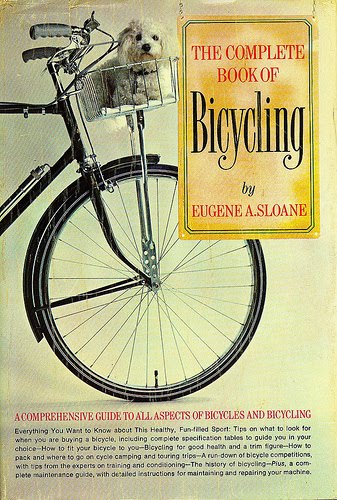
I first learned of the Bike League (LAB, though the legal description is "League of American Wheelmen, DBA League of American Bicyclists", or LAW DBA LAB) through Eugene Sloane’s book, forty years ago. Through the years, I’ve bumped up against it from time to time, but it never seemed very compelling. Indeed, as an organization, it has had major ups and downs. More recently, I was unexcited by its attempts at political influence, and considered its “bicycle friendly” attempts a bad joke. It didn’t help when I signed up for a Traffic 101 Course that got cancelled without notice. Actually, my Facebook profile picture shows me riding off to that cancelled class, ignorant that it was not to be. My new commute hardened my attitude about the organization. Thankfully, Whareagle  and BikinGail have gotten some Bike Ed going locally once again.
I joined the Bike League this month. There are two reasons I joined.

The first reason is that I know that cycling education can make things safer for any cyclist, regardless of experience level and available infrastructure, and it is the ONLY step a cyclist can personally take to BE safer while riding. Need I repeat? Alone amongst national bicycle organizations, the Bike League has an organized program to teach cycling, and to certify the instructors, and its program has a sound basis. This may change some day, but for now, in Texas, LAB is it. While PM Summer and I may not agree on all things, just today, he advised: "I recommend that San Antonio's bicycle coordinator contact a local LCI (League Cycling Instructor) in order to learn how to ride safely and confidently. She'll be glad she did." THAT says it all. Thanks, PM. What's more, that is good advice for pretty much anybody. I know I've picked up useful information from each unofficial and offical Bike Ed I've had, and I've been riding longer than my loyal reader has been alive.

The second reason is you have to join to become a certified instructor. LCI class is next weekend.

So, in reality, if someone wants to know why I joined, and why I don’t quit, I’ll pinch a scene from “AN OFFICER AND A GENTLEMAN,” where Officer Candidate Mayo, when harassed by the Gunnery Sergeant about why he doesn’t just quit, yells back “I got nowhere else to go!” Actually, that’s a pretty good reason, and I can think of quite a few people I respect who belong, and remain in LAB, for exactly that reason. I know others that have left LAB because of the feelgood mumbo jumbo and because LAB has drifted from its roots, but, in my mind, I'll put up with that because it retains the one element that cyclists can take advantage of to proactively make a choice to be safer. And nobody else has that element.